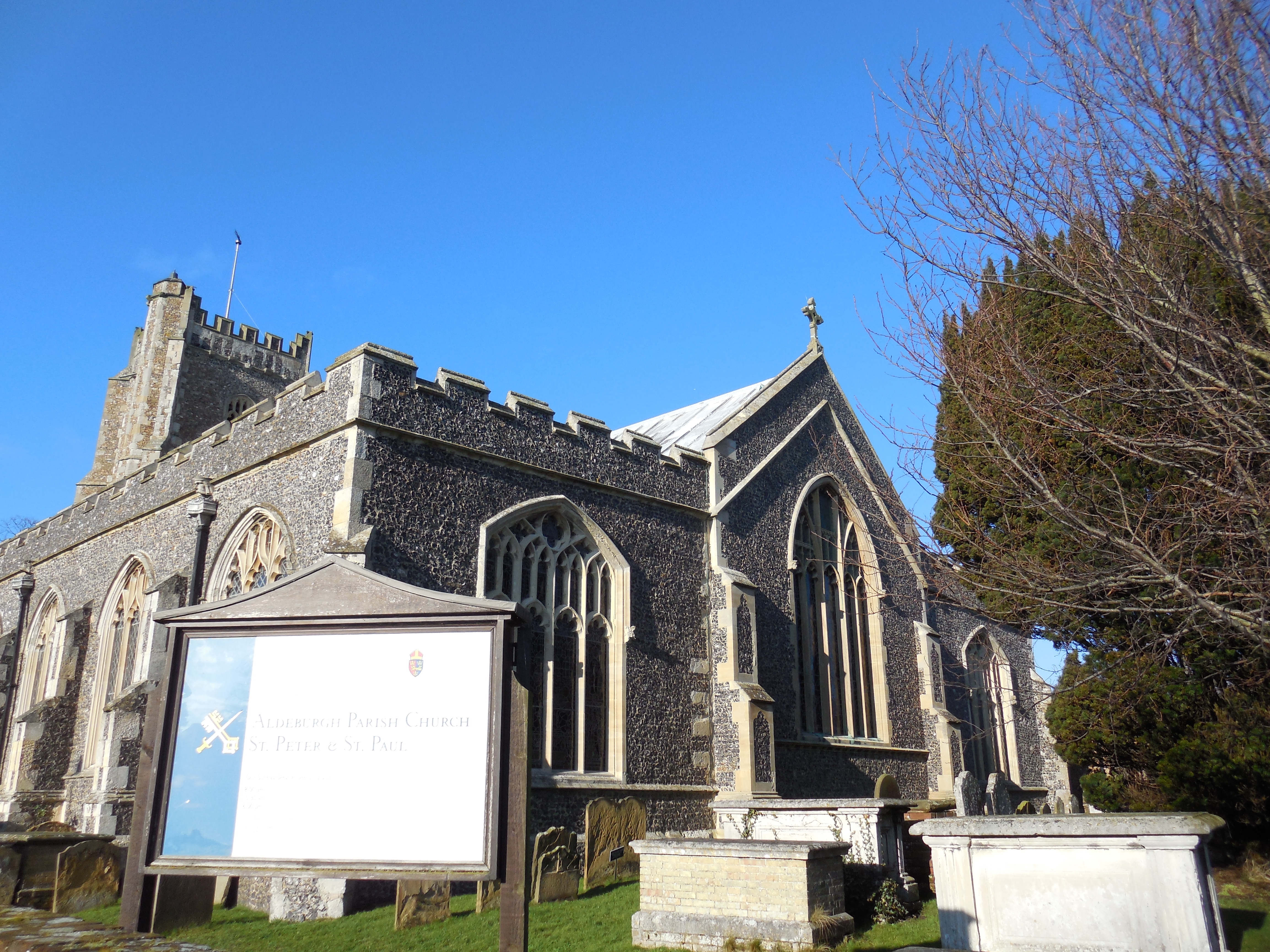
Before heading out to Snape, we looked around the Aldeburgh Parish Church for a bit.
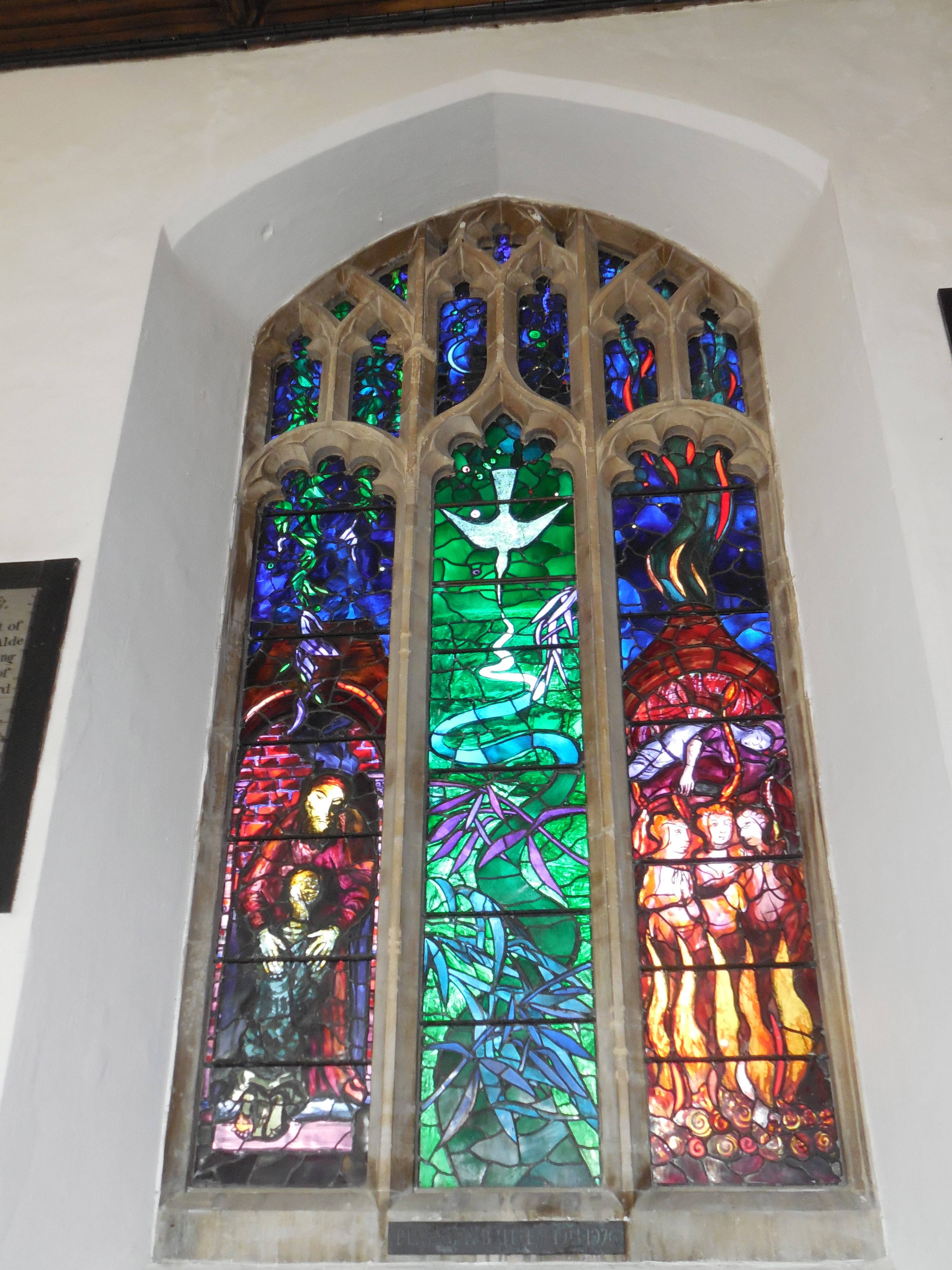
 The church commemorates several famous people, including Britten and Pears and poet George Crabbe (from whose work Britten drew inspiration for Peter Grimes) The Britten Memorial Window (below), painted by John Piper, was by far the most vibrant one in the church, bold and innovative where the others are closer to the windows one normally sees in places of worship. Each panel illustrates a piece in Britten’s Church Parables: Curlew River, The Prodigal Son, and The Burning Fiery Furnace.
After exploring the interior of the church we went out to the graveyard to find the final resting places of Benjamin Britten and Peter Pears. I’ve always felt strangely outside of myself when seeing the graves of those whom I admire. There’s a link between my experiences and theirs as the vessel holding all the years of lives lie at my feet. At no other time do I feel like I know people more than when I see their gravestones, and then I feel both alive and dead simultaneously. With Britten and Pears I thought particularly about the impact each had on the other and wondered how much of Pears was in the notes of the War Requiem and how much of Britten was in Pears’ singing.
Neither grave had an inscription. Subjectively, I was disappointed because I’m rather fond of words… the lovelier, the better. Objectively, what needs to be said? Their best work pleases our ears, not our eyes, and that can’t be replicated on a tombstone.
Curiously, there were stones placed on both graves. This puzzled me at first, since that is a Jewish ritual, and neither Britten nor Pears was Jewish. However, apparently placing stones has spread to other faiths as a sign of respect and god’s love, and it’s seen sometimes on Christian and Muslim.
 Benjamin Britten wanted to be buried in the reed-banks of Snape, a nearby town where the Aldeburgh Festival is now held (more later on). It isn’t that hard to see why:
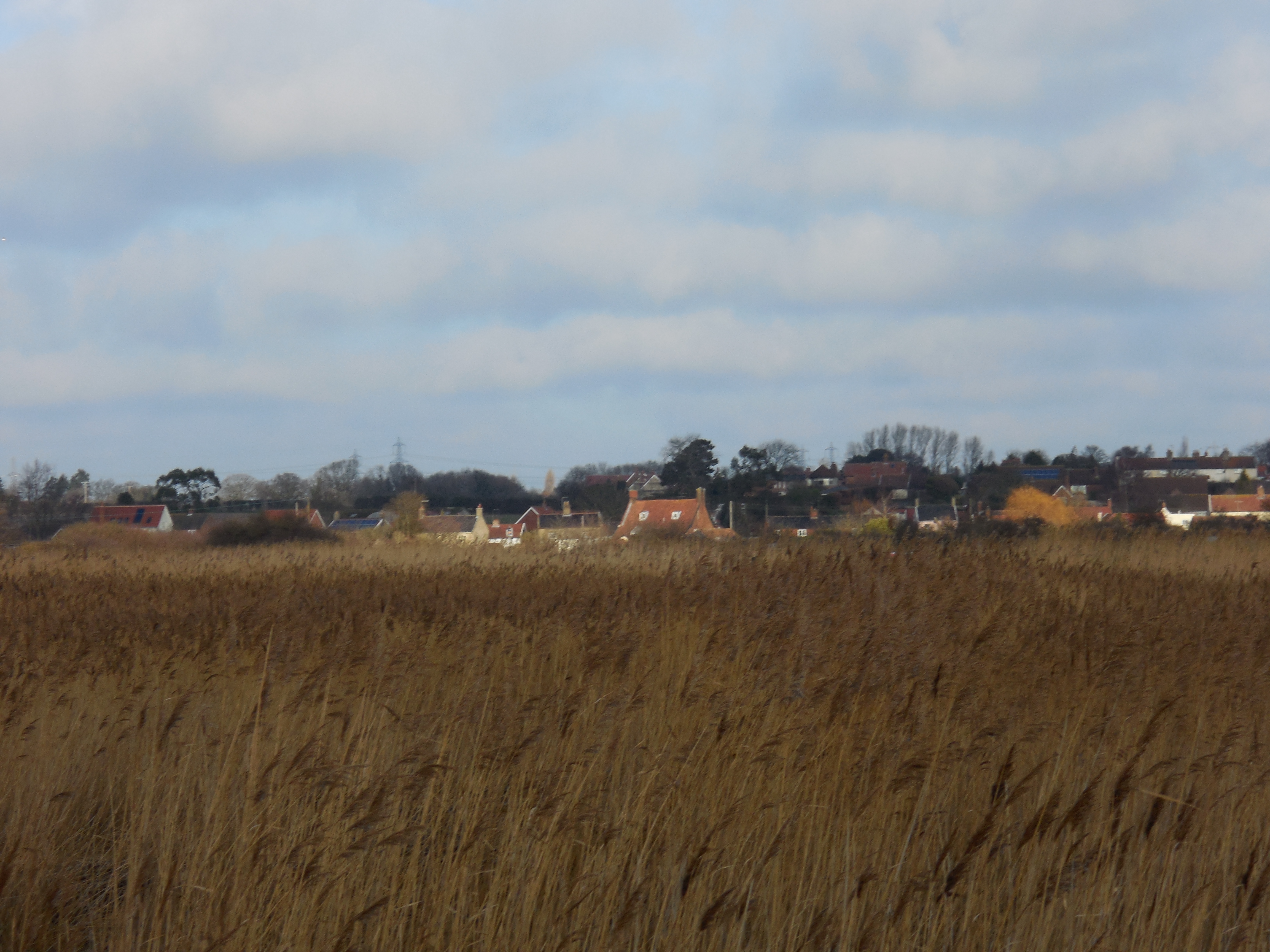 But as this was impossible, he was buried in the Parish Church yard, his grave lined with sewed reeds as acknowledgement to his wishes (see Britten-Pears Foundation website for more).
Anyhow, Snape had the same open charm as Aldeburgh although smaller… under 1,000 people live there, while Aldeburgh’s population is approximately 2,700. We took a peek at the Maltings there, but the Concert Hall was closed for repairs. Every June the Aldeburgh Festival is held in Snape.
After that we headed back to Aldeburgh to tour the Red House and Britten-Pears Foundation. First stop was the Archive, where we saw and leafed through preliminary drafts of the War Requiem and Wilfred Owen’s “Anthem for Doomed Youth,” sent to Britten by Owen’s brother, who was very impressed with the Requiem. Unfortunately I can’t share those photos here. I needn’t say that that experience was special; that much is obvious. The handwriting alone reminded me of how much I never knew about Britten and would never know… wissen vs. kennen, if you will. Knowing facts vs. knowing a person familiarly. I can’t think of any other way to put it. Thank goodness for German.
Then we walked over to the Gallery. The Slung Mugs used as an instrument in Noye’s Fludde (Noah’s Flood) were there, as well as the tritone. (Sounded to me like a G-C#; correct me if I’m wrong.) The end of a 1964 performance of the War Requiem was shown as a part of the exhibit there, and as the camera zoomed out I found my thoughts were sluggardly. It might have zoomed out infinitely, as far as my mind was concerned. I find I’m lost at the end of every listening, that my thoughts lag behind the notes not because I’m analyzing it but because I wonder why it should speak to me so deeply. I have never been to war. To me, I suppose, the work is tangible, though I don’t know what it feels like.
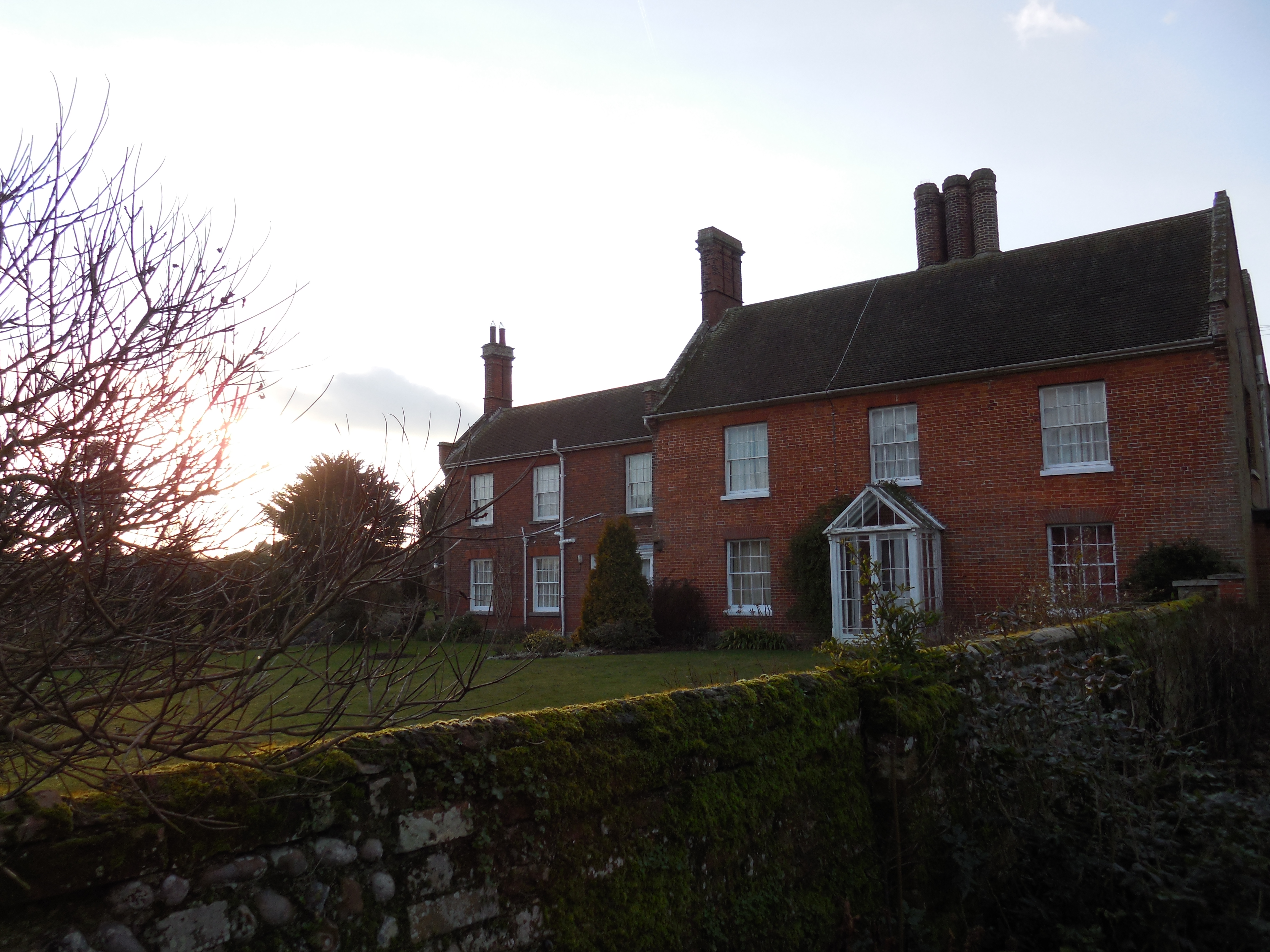
After that we visited Britten’s studio. There was a desk, a table, and a piano. Again, no photos allowed. But apparently the sunset was visible to Britten through the window over his desk. Britten only composed during daytime because he didn’t trust his work would be as good at night… and if every day of work ended with that sunset, wow.
The sun sets a little after four in England, which took a bit of getting used to for me. However, it makes for quite nice ambiance, especially here:
 On an arbitrary note: apparently there was a lot of Britten music in Moonrise Kingdom, so I’ll be rewatching that one as soon as I get in the States. That’s a fun film. Everybody should watch it.
 Britten's War Requiem Winter Term 2014