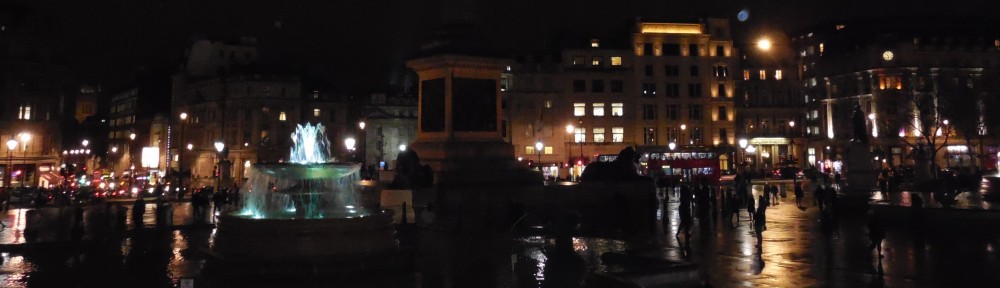
There were no group activities scheduled for today, so I slept in a little (yay!) and visited Shakespeare’s Globe and the British Library.
450 years have passed since the world gave us Shakespeare. Because of this, there will be a year-long celebration… with most of the activities beginning in March or April. (He was born in April.) It would have been criminal not to visit the Globe while I’m here. I got to the Globe just after 12:30 and signed up for the next tour at 1, which gave me thirty minutes in the exhibit. Suggestion for anybody planning on going: half an hour is not long enough to get the full experience there. More like an hour or hour and a half.
University in Shakespeare’s time apparently didn’t accept married men, so he didn’t get to go. Too bad he knocked up Anne Hathaway (not the actress) and had to marry her. So instead of going to school he wrote beautiful poetry and plays and is remembered to this day. Take that, University. Most people in London hated theater, so actors headed to the south side of the Thames to make a theater district outside of the city. (16th-century London only existed north of the Thames. Since then it’s expanded a little.)
Outside of the theater there were names of donors on the ground—including Laurence Olivier and Vivien Leigh. That was quite wonderful. This is the third Globe Theatre—the first burnt down early on and was promptly rebuilt, while the second fell into disrepair after Shakespeare’s death and eventually was demolished. This new Globe is less than two decades old, but the period detail is spot-on.
Back in the day, tickets cost a penny for standing room in the front. This area was for poor people, referred to not-so-affectionately as “penny-stinkers” because they didn’t bathe. (But apparently Queen Elizabeth got away with bathing once a month.) Bench seats cost tuppence, chair seats cost threepence, and the seats behind the stage cost sixpence and were reserved for nobles whose fineries could be enjoyed by commoners along with the play. Now the sixpence seats are used for musicians, as there is always live music for Globe Theatre productions.
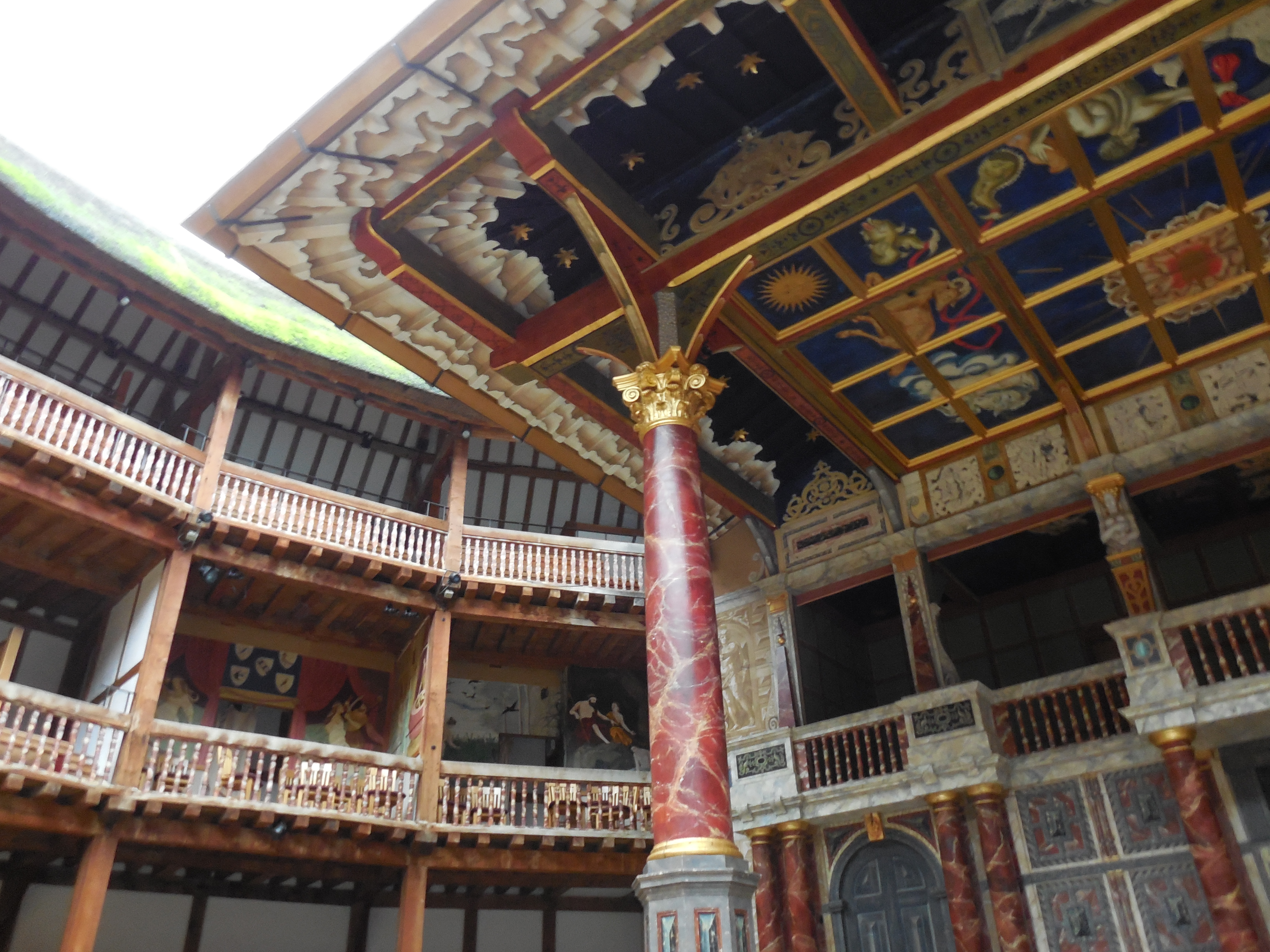
There’s some interesting detail in the ceiling, which depicts the heavens with a sun in the middle. The sun is actually a trapdoor from which “gods” can descend to the stage. Alternately, visitors from hell pop up from the trapdoor on the stage. Ghosts in Shakespeare’s plays, such as Hamlet’s deceased father, made their entrances this way. So ghosts are supposedly from hell or purgatory or something. Guess this is the standard interpretation.
There’s just something about stepping back so wholly in time. I can’t really place a finger on it, and the experience isn’t complete until I see a play there. Perhaps when it’s a little warmer. Better not to have excitement dampened by a runny nose.
At the British Library I really lucked out, since there was a tour at three and I got there in time to get in on it. The tour was well worth it; I walked out knowing a lot about the library’s storing, protection, and access of materials along with other general information that I wouldn’t have known from just going there. All books published in the U.K. have to come to the Library by law. There are over 200 million items and four basements for storage. Additional items go to the Library’s other building in Yorkshire.
Many academics come there to research. Materials in the library are only available to those with Reading Passes, which can be procured by showing documentation and providing information about research people would plan on doing there. Reading Passes are available to people whether or not they live in the U.K., and they’re free of charge.
Non-fragile materials are moved on a conveyor belt and delivered to the reading rooms from which researchers can make requests. Fragile materials are delivered by hand. All in all, the British Library seems to have efficiency down.
And of course no visit to the British Library is complete without the Treasures Gallery. Seeing the Magna Carta… holy crap. 800 years of history seen by myriad people of many generations. (I’m exaggerating, maybe, but I really don’t care.) How is it possible to keep 13th-century paper from rotting? Pretty much everything in Illustrated Manuscripts: Europe looked like the Grail Book from Indiana Jones and the Last Crusade… not the Grail Diary that Indy’s dad had, but the illustrated book with the three knights of the First Crusade that Donovan showed Indy at the beginning of the movie. It only got better from there: Mendelssohn’s Wedding March manuscript, Beethoven’s tuning fork (!!) and Violin Sonata in G Major, an 11th-century copy of Beowulf, a letter from Winston Churchill regarding United Nations on September 1, 1944 (five years to the day Germany invaded Poland), “Yesterday” Paul scrawl in the Beatles exhibit, and W. H. Auden’s 1939 notebook. The plaque’s last sentence read: “Auden writes too about meeting Benjamin Britten and Peter Pears who were also living in New York in 1939.”
Now I really can’t wait for Aldeburgh.
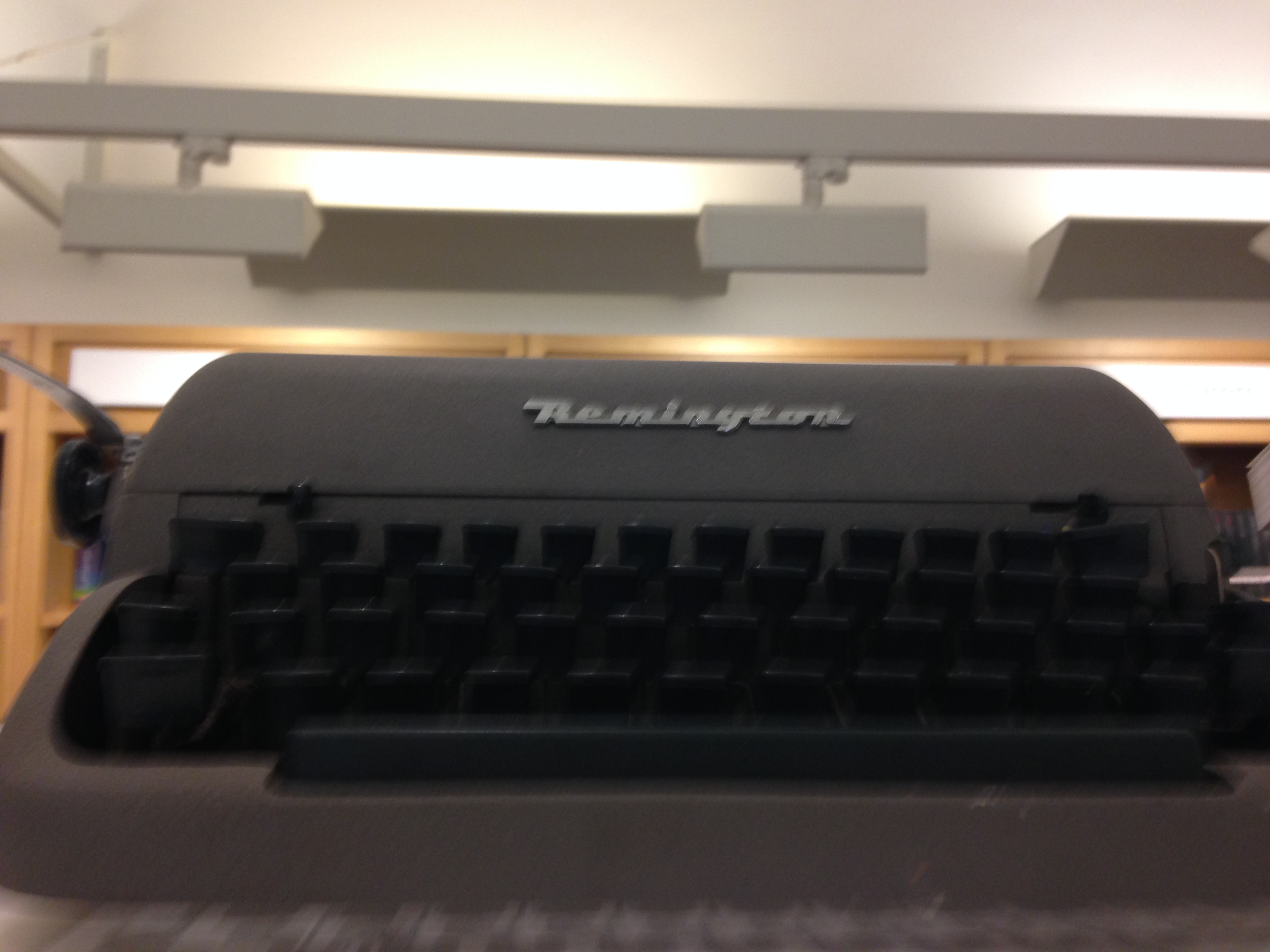
In other news: apparently things need not be living to be able to move. My typewriter followed me here.
Dorm British Library Gift Shop

 Britten's War Requiem Winter Term 2014