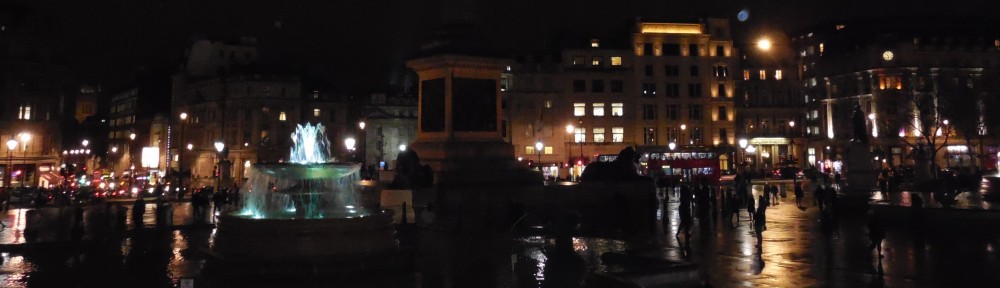
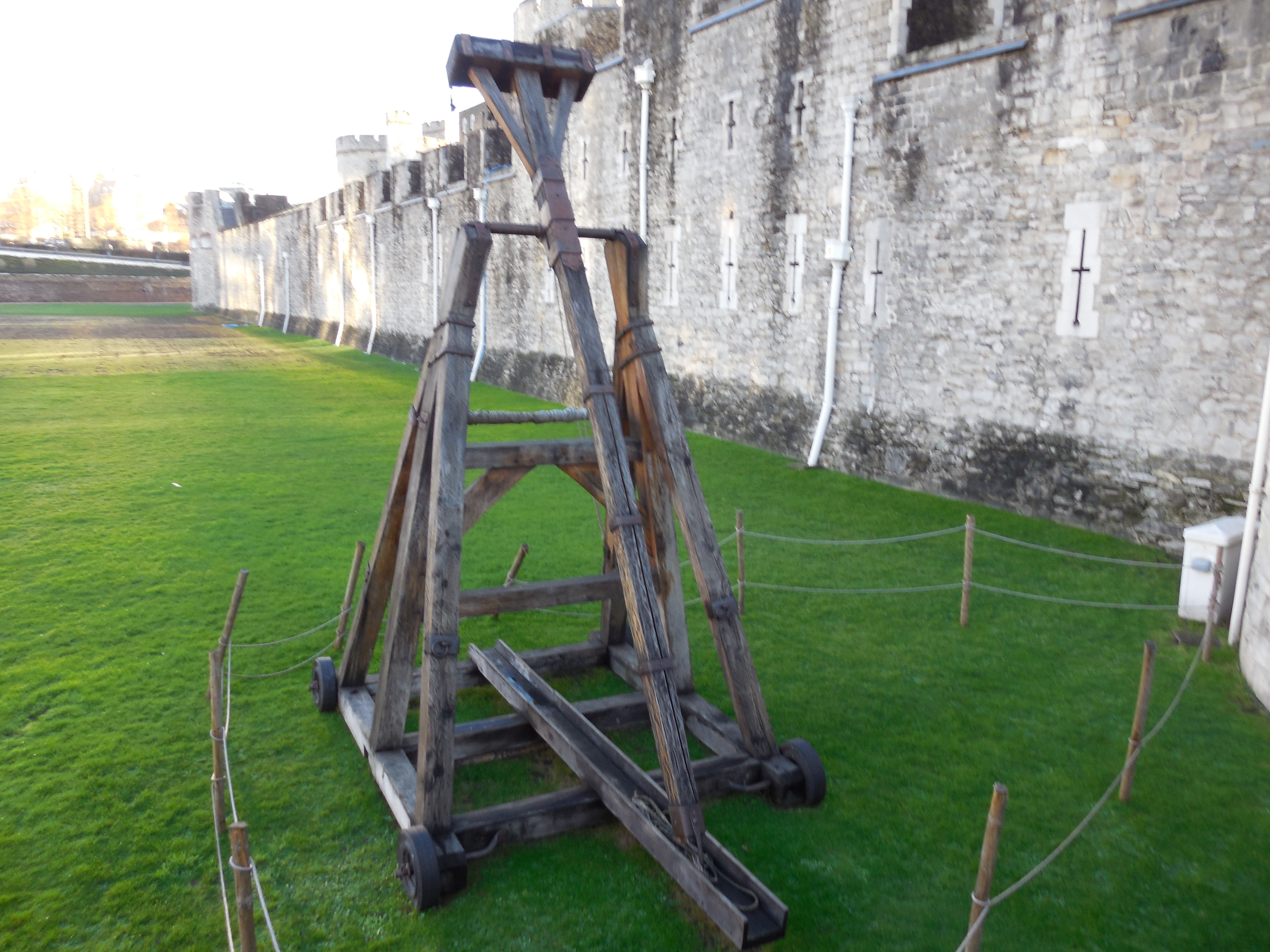
Today there was a lot lined up, which made things spontaneous and fun. We started off this morning early at the Tower of London, and saw, among other things, this trebuchet.
 Also on display were various torture devices, including manacles and the infamous rack, historical weapons, and Royal Mint coins and coin presses. Interestingly, pounds sterling were said to have originated with the coinage of William the Conqueror where it was used for reliability reasons. I also learned that King George VI had a sword… maybe he should have hopped over to Germany and decapitated Hitler with it.
Delaroche’s The Execution of Lady Jane Grey in the National Gallery made an appearance on one of the information boards. (Also known as the Nine Years’ Queen, Lady Jane Grey was convicted of treason and executed in favor of bringing another queen to the throne. Ironically, Grey’s successor, “Bloody Mary” I, ended up screwing England over by trying to switch it back to Catholicism and killing a lot of Protestants in the process.)
St. John’s Chapel had to be my favorite because it had that neat old air and look about it—no wonder, being from the 11th century. Apparently it’s London’s oldest church. It’s silly, but I find myself fascinated by how vastly different old is from new. Before studying the evolution of style—architecture in this specific instance—stuff like St. John’s Chapel just seems to be from a completely different world. Too bad we couldn’t take pictures; otherwise it’d be on here.
Oh, and we also saw the Crown Jewels. I definitely had mixed feelings about that. It seemed too opulent, though nowhere near as bad as the Vatican—saw it in 2006. (As comedienne Sarah Silverman once said, “Sell the Vatican, save the world.”) In 2011 I had gotten quite a different vibe from Buckingham Palace: it was quite tastefully decorated, nothing really done to excess. (Following Aristotle’s Doctrine of the Mean, falls on the mean of magnificence rather than the excessive vice of ostentatiousness or deficient vice of stinginess, is the best way I can describe it for you other philosophers out there.) Now to ensure that the Jewels don’t ruin Buckingham Palace for me, which probably won’t happen… although I can’t deny that my comfort level went way up after leaving that particular exhibit.
Next was St. Paul’s Cathedral (cue “Feed the Birds”). The religiosity there wasn’t very interesting in itself, but it did play a big role in early music development from what I understand. In the twelfth century St. Paul’s educated boy choristers and pushed the boundaries of church music in the process, exploring expression of faith.
From St. Paul’s Golden Gallery, 528 steps and 85 meters (approximately 279 feet) from the main floor of the cathedral, the view was spectacular. Nearly asphyxiating from the climb was worth it. We got there before the sun passed behind the clouds, and the air and slight breeze felt nice.
 At around three we headed to Westminster Abbey, which closed for visitors at 1:30. We got to go in anyway because there was a service (yay). I don’t know my sects very well—or the religions themselves for that matter—but it was Anglican. Before this I hadn’t been a service for probably around ten years, so I had no idea what was going on, but it was interesting. In any case I walked over Charles Darwin and Ralph Vaughan Williams, among others.
Betjeman’s “In Westminster Abbey” is one of my favorite poems, and I thought about it a little today. Written early during World War II, it satirizes framing war through religion and seems to pick up where World War I left off—at the doubting left by all affected parties who thought that god would help them win, at the deep reluctance to fight a war ever again. The tone seemed acerbic, but it rang very true. It’s even somewhat relevant to the course—certainly the War Requiem noted the ties between religion and war, though a commentary on those ties isn’t as visible in the work.
Our last stop (and my favorite) was the Churchill War Rooms. I remembered my fondness of the place from an earlier trip to London. It’s definitely a more hands-on approach than most museums, allowing us to immerse ourselves by providing the original structure and leaving details almost completely unchanged from the 1940’s. Studying World War II has been an interest of mine for a really long time, and in the War Rooms I always feel like a kid in a candy store. Last year, when visiting the Roman ruins at Volubilis in Morocco, I found the civilization rebuilding itself before my eyes, aided by the perfect light provided by dusk and the nests where shadows fell. For the shadows were tall, as the buildings must have been. It took only a little bit of imagination. In the Churchill War Rooms, it takes none. It’s all right there.
In 2011 I bought the Ration Fudge in the gift shop there. Now I’m vegan. But I did manage to find a (vegan) chocolate cigar instead, and that will be quite the adventure.
 Britten's War Requiem Winter Term 2014